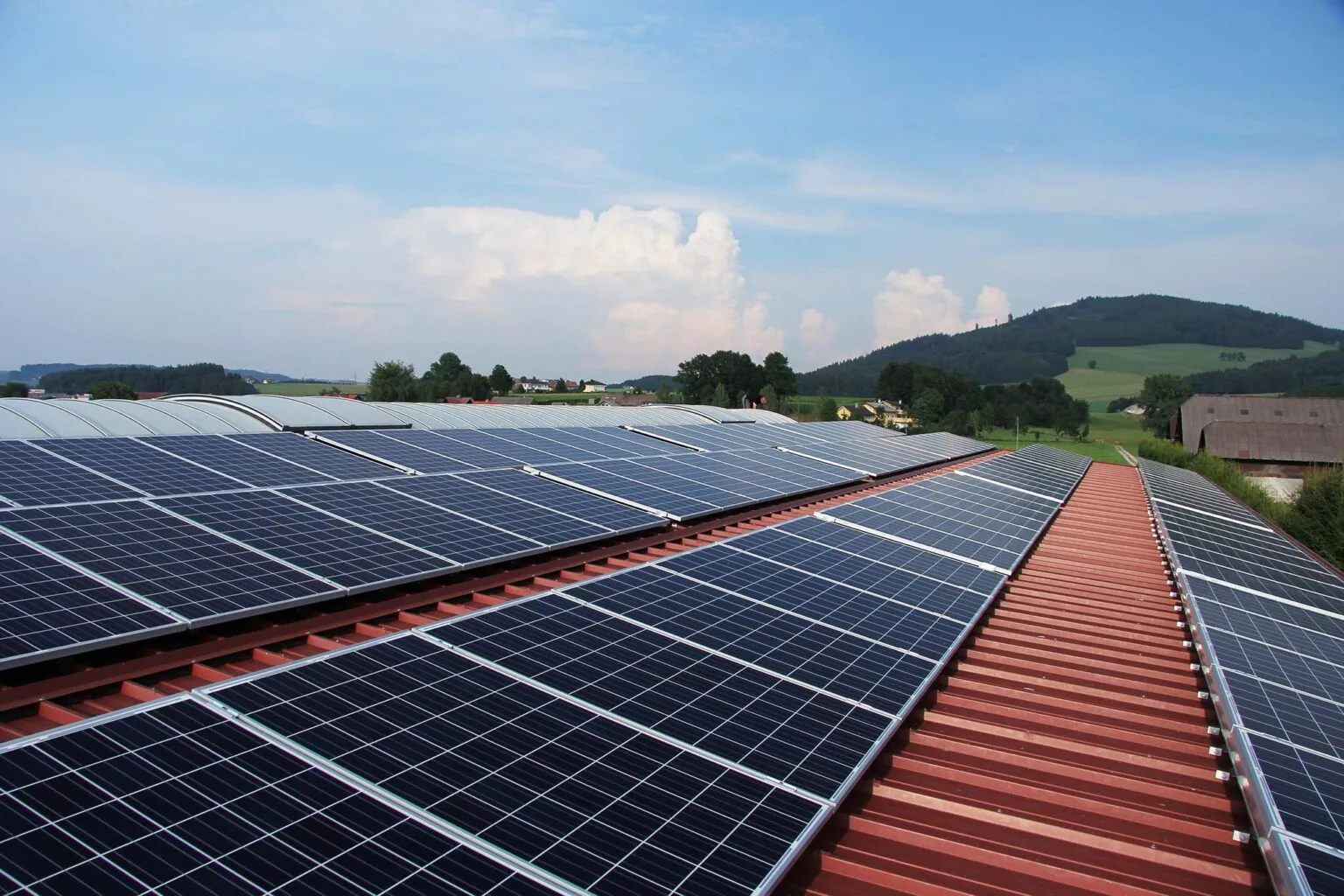
50 kWp — NET OF AIA
£27,995
net cost · gross £34,995
Gross £34,995 less ~£7,000 AIA tax relief (25% corporation tax band). Energy savings ~£15,000/yr. Net payback under 2 years.
EnquireYes — commercial solar PV is one of the most tax-efficient capital investments a UK business can make. The Annual Investment Allowance (AIA) delivers 100% first-year deduction up to £1m; Full Expensing covers anything above (permanent from April 2026). This page explains exactly what qualifies, the maths your accountant will run, what to document at install, and how AIA stacks with grants and energy savings.
Plain-English tax-relief guide · Worked examples · Accountant-ready cost breakdowns · Bankable-grade ROI projections with tax modelled in · MCS/NAPIT accredited
Every review on this page is from a real Yorkshire customer, sourced directly from our Google Business Profile.
Read all reviews"I few months ago I had a full PV + battery system installed by Future Power Team. The experience was excellent. Kane explained my options and gave me suggestions considering my bud…"
"Everyone has been amazing to deal with .Great product and value."
"I’ve been after some solar panels for a while now and these guys were absolutely fantastic from start to finish. It took no time at all for someone to come out and whey the job up.…"
"Kane from future power came to do my survey and he explained everything in clear detail. He was also very polite professional and friendly. To begin my install Jack came out and he…"
"Great experience - would recommend"
"Had panels and battery installed in March 25. Great service throughout the process from quote to install, all documentation sent through quickly following install. Would recommend…"
"Very helpful friendly team, Lee as all the other reviews state was most helpful- honest - polite and friendly. Would highly recommend this team and their business."
"I would definitely recommend Future Power Team, they were a really professional company, who took time to understand our green energy requirements and install a system to deliver-…"
The short answer to "is commercial solar tax deductible?" is yes — and the relief is unusually generous. The Annual Investment Allowance (AIA) lets your UK business deduct 100% of qualifying solar PV expenditure from taxable profits in the year of purchase, up to £1 million per business per year. For limited companies above the AIA cap, Full Expensing (made permanent in the April 2026 Finance Act) provides continued 100% first-year deduction with no annual ceiling. Solar PV qualifies under both regimes as plant and machinery.
In cash terms: every £100 spent on commercial solar typically returns ~£19-£25 via reduced corporation tax in year 1 (depending on your profit band — currently 19% small-profits rate, 25% main rate, 26.5% marginal-rate band between £50k and £250k profits). For a typical 100 kWp install at £69,995, AIA delivers roughly £13,300-£17,500 of effective relief — turning the net-of-tax cost into £52-£57k against energy-cost savings of ~£30k/year. Net payback inside 2 years is the normal outcome.
The mechanics are straightforward: your accountant claims AIA via your year-end accounts using the cost breakdown we provide at install. There's no separate application, no waiting list, no qualifying assessment — solar PV qualifies as long as it's installed for trade purposes by a UK business with taxable profits. At Future Power Team we model AIA / Full Expensing into every commercial quote so the net-of-tax cost and post-relief payback are visible upfront. Request a free site survey and we'll deliver a bankable model your accountant can verify.

Finance available: spread the cost over 3–10 years from 10.9% APR Representative with Phoenix Financial Consultants. See finance options →
What you actually pay is the gross install cost less the AIA tax relief. The tiers below assume a profitable limited company at the 25% corporation-tax main rate, claiming AIA within the £1m annual cap. Smaller businesses at the 19% rate get slightly less relief; higher-rate sole traders can get more.
Gross £34,995 less ~£7,000 AIA tax relief (25% corporation tax band). Energy savings ~£15,000/yr. Net payback under 2 years.
EnquireGross £69,995 less ~£14,000 AIA tax relief at 25%. Energy savings ~£30,000/yr. Net payback ~1.9 years. Comfortably within the £1m AIA cap.
EnquireFor ltd-co. installs above the £1m AIA cap, Full Expensing (permanent April 2026) provides continued 100% first-year deduction. Worked examples in our quotation for systems above 250 kWp.
EnquireNet-cost calculations assume a UK trading business with sufficient taxable profits to absorb the AIA in year 1. Actual relief depends on your specific tax position, profit band, accounting period and whether AIA capacity is shared with other plant-and-machinery purchases. Always confirm with your accountant before relying on a net-of-tax projection.
UK capital allowances on solar are simpler than they sound — four mechanisms cover almost every commercial scenario. Your accountant runs the maths; we provide the cost breakdown and asset register in the format they need.
The Annual Investment Allowance lets your business deduct 100% of qualifying solar PV expenditure from taxable profits in the year of purchase, up to £1 million per business per year. Solar PV qualifies as plant and machinery; the AIA cap is generous enough to cover almost any single commercial install. Effective tax relief = corporation-tax rate × installation cost.
Full Expensing (announced 2023 Spring Budget, made permanent in the April 2026 Finance Act) provides continued 100% first-year deduction on main-pool plant and machinery for limited companies — no annual cap. Solar PV qualifies. Practical effect: for a profitable ltd-co spending £2m on a large industrial array, the full £2m comes off year-1 taxable profits, saving up to £500k in corporation tax.
AIA applies to limited companies, partnerships and sole traders alike — corporation tax for ltd-cos, income tax for partnerships and sole traders. Full Expensing is ltd-co only (for the time being). Charities, non-trading entities and businesses without taxable profits get no immediate relief but can carry losses forward. Most UK trading businesses get the full AIA benefit on commercial solar.
If you receive a UKSPF or PSDS grant, capital allowances apply to the net cost you actually pay. A £20k grant on a £100k system means you claim AIA on the £80k net spend, getting ~£20k of grant + ~£16k of AIA relief — combined 36% effective reduction. Always confirm with your accountant that the grant is non-taxable income (most business-energy grants are).
Different business types access capital allowances differently — ltd-cos via corporation tax, partnerships via the partnership return, sole traders via income tax, public sector via PSDS grants instead. Mapped to entity structure below.
For ltd-cos, AIA delivers 100% first-year deduction against corporation tax (currently 19-25% depending on profit band). Above £1m/year of qualifying spend, Full Expensing takes over with the same 100% deduction. Effectively ~20% of every pound spent on solar comes back via reduced corporation tax in year 1.
For partnerships (including LLPs), AIA applies against the partnership's taxable profits — each partner picks up their share via the partnership return. Same 100% first-year deduction up to £1m/partnership/year. Common structure for farms and family-run businesses.
For sole-trader businesses (typical structure for smaller farms, single-owner SMEs), AIA applies against trading profits assessed under income tax (20-45% depending on band). Effective relief can actually be higher than ltd-co relief for higher-rate sole traders. Sole-trader farms benefit particularly.
Farms can layer AIA capital allowances against trading profits with Sustainable Farming Incentive (SFI) renewable-energy provisions. Common structure: AIA delivers ~20% via tax relief, SFI delivers an annual stewardship payment alongside the energy savings. See our farms page for sector-specific worked examples.
See agricultural detail →Public-sector estates (schools, NHS, councils) have no corporation tax liability and so don't access AIA. Instead, the Public Sector Decarbonisation Scheme (PSDS) provides direct capital grants — often covering 50-100% of the system cost. PSDS Phase 5 open through 2026.
See PSDS detail →Charities, social enterprises and non-trading entities without UK taxable profits can't claim AIA in the year of install. Investment may still make sense via energy savings + PPA / lease structures, where the system owner (a profitable third party) captures the capital allowances and passes through some of the benefit via cheaper electricity rates.
Yorkshire businesses span every entity type that can claim capital allowances — large limited-company manufacturers around Leeds and Sheffield, family-partnership farms across the Vale of York and the East Riding, sole-trader SMEs on industrial estates from Bradford to Hull, charity-owned community buildings in every market town. We model the appropriate relief route for your specific structure in every quote.
For Yorkshire farming partnerships, AIA against partnership profits is the standard route — typically a 20-25% effective relief depending on partner tax bands. For ltd-co manufacturers above the AIA cap (rare but it happens on £1m+ industrial arrays), Full Expensing kicks in. For Yorkshire's public-sector estates (the universities, NHS trusts, Sheffield/Leeds councils), AIA doesn't apply but PSDS grants typically do — see our funding page for that route. For charities and community-owned buildings, a PPA structure with an asset-owning third party often makes more sense than direct ownership.
Common pitfalls we help avoid: (a) splitting solar across multiple installs to "stay under the AIA cap" — this rarely helps and often reduces volume discount; (b) timing the install just-after a year-end and missing the AIA window for current-year profits; (c) treating commercial-grade battery storage as a separate non-qualifying item — it qualifies under the same plant-and-machinery rules; (d) assuming a PPA is automatically cheaper than buying outright — when AIA + ownership are factored in, direct ownership usually wins. See our grants page for how AIA stacks with UKSPF and PSDS, or our commercial hub for the broader brief.
We work across a full range of leading brand partners — picking what fits your home, your tariff and your roof. Same install standard whichever you choose.
See all 19 brand pages


Honest answers about UK capital allowances on commercial solar — what AIA covers, how Full Expensing differs, whether battery storage qualifies, what documentation is needed, ltd-co vs partnership vs sole trader, what happens on disposal, and how AIA stacks with grants.
Request a tax-modelled quoteTell us about your home and we'll be in touch within 24 hours to book your free survey. Your all-inclusive, itemised quote follows within 5 working days. No pressure, no pushy sales, just honest support from a friendly local team.