How do I know if I have 3-phase supply? +
Check your meter cabinet. A single-phase supply has one main fuse (usually 100A); a 3-phase supply has three (typically 60-100A each). The incoming meter tails will also be different — 3-phase has 3 live conductors + neutral (4 cables) where single-phase has 2 (live + neutral). If unsure, look at the main isolator switch or the meter itself, which will be labelled. We confirm during survey before specifying any 3-phase equipment.
What's the difference between 1-phase and 3-phase solar? +
A 1-phase solar inverter feeds AC into one of your home's three power conductors (the only one you have on a single-phase supply). A 3-phase inverter feeds AC into all three conductors equally, balanced. For homes with 3-phase supply this is essential — feeding only one phase causes unbalance that violates DNO connection conditions and may damage equipment. 3-phase inverters also unlock higher export limits (up to 17 kW vs 3.7 kW on single-phase) and pair with 3-phase loads like commercial EV chargers, induction kitchens, AC systems and heat pumps.
How much does a 3-phase solar system cost? +
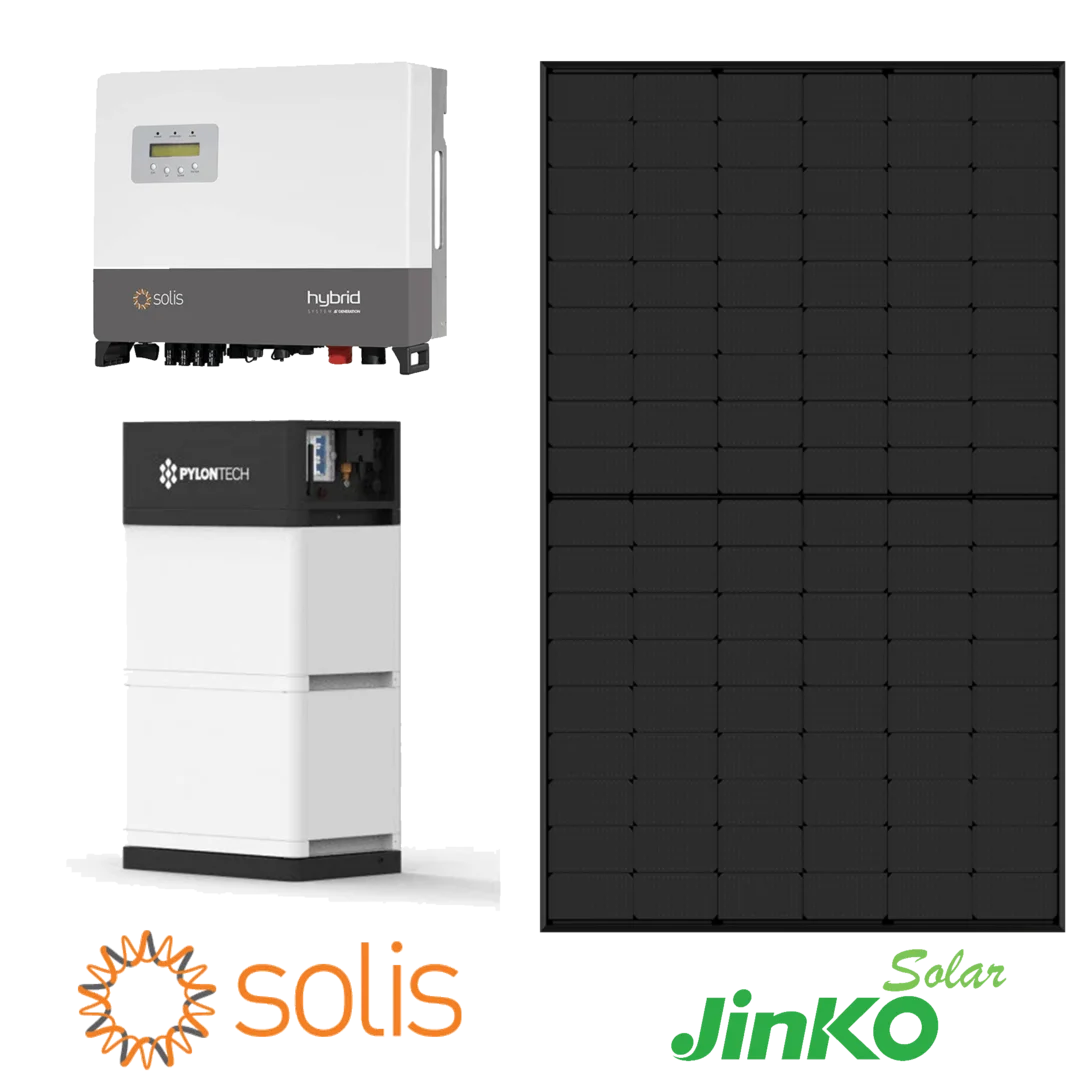
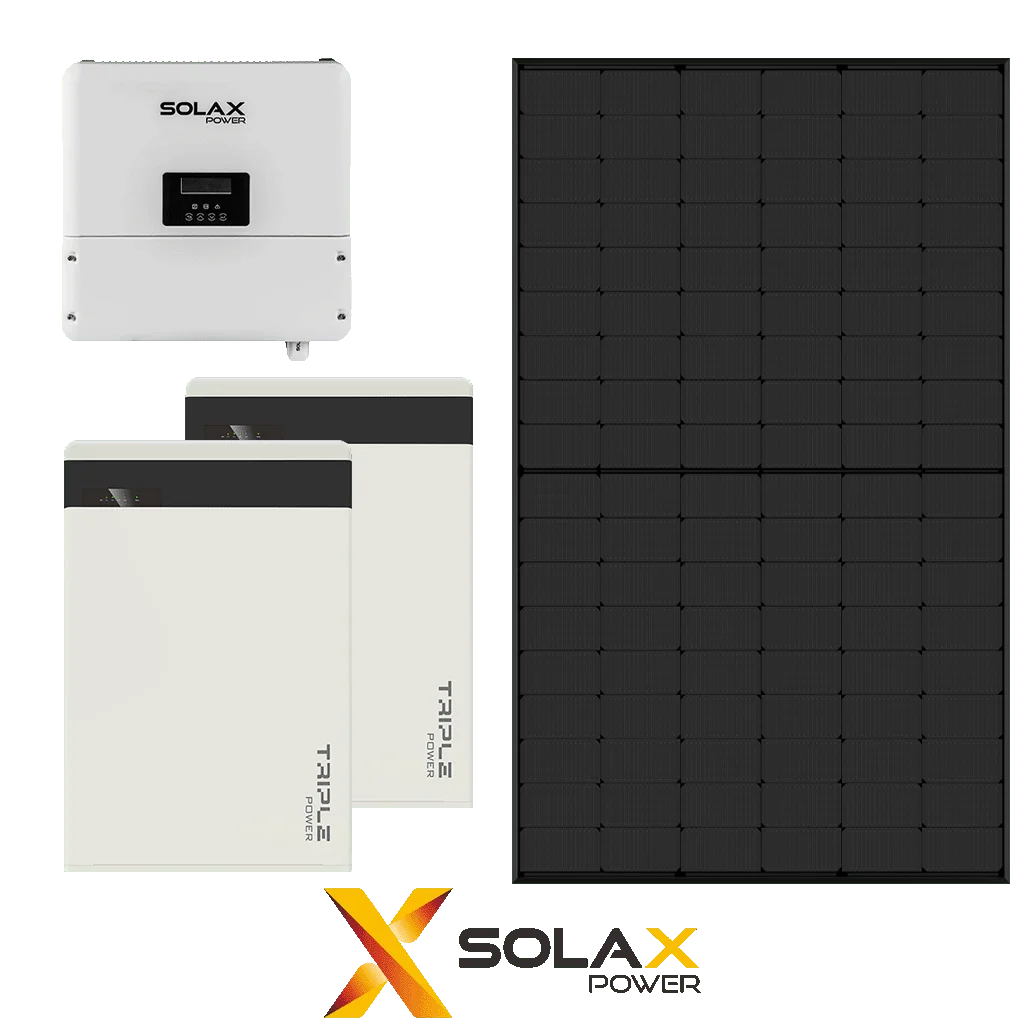
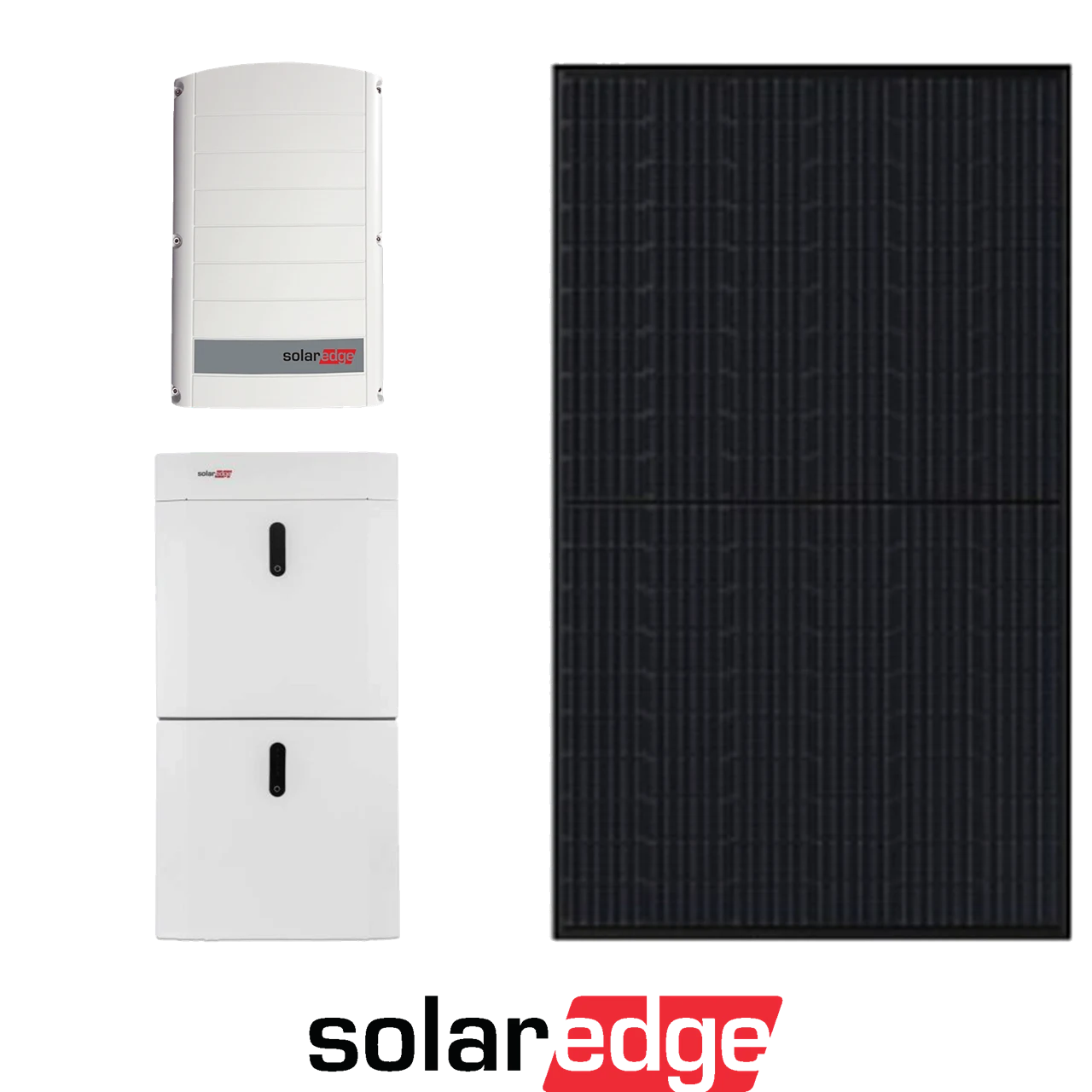
Our fully-installed 3-phase packages start at £9,395 (Solis + Pylontech 8.55 kWp + 10 kWh battery), through £10,695 (SolaX + Triple Power 8.55 kWp + 11.4 kWh) and £12,495 (SolarEdge 3-phase + Energy Bank 8.55 kWp + 9.7 kWh). All prices fully inclusive: scaffolding, MCS certification, DNO G99 paperwork, commissioning, VAT, 5-yr FPT workmanship warranty. No deposits required — you pay after commissioning.
How many panels can a 3-phase system have? +
Practically: up to about 12 kWp on a typical Yorkshire residential 3-phase system, limited by roof area more than electrical capacity. The DNO will approve up to 17 kW export under standard G99 (above this requires a network reinforcement study). 3-phase inverter sizing usually pairs ~1.0-1.3× DC kWp to AC kW: an 8 kW 3-phase inverter pairs comfortably with 8-10 kWp of panels. We size to your roof area, your annual consumption, and your DNO approval limit — typically 8-10 kWp.
Can I add a 3-phase EV charger to my solar system? +
Yes — 3-phase EV chargers (Andersen A2, MyEnergi Zappi 3-phase, Ohme 22kW) draw up to ~22 kW which a single-phase supply cannot deliver, but a 3-phase supply handles comfortably. Pair the 3-phase solar with a 3-phase EV charger and you can charge directly from solar at maximum efficiency. Several of our offers (SolaX especially) include native EV-charger integration in the same management app. We design the combined system at survey.
Does my battery need to be 3-phase too? +
Not necessarily. Most domestic batteries (Pylontech, FoxESS EP, SolarEdge Energy Bank, SolaX Triple Power) connect to a 3-phase hybrid inverter via a single-phase DC bus and the inverter handles the 3-phase distribution. So the battery itself is "single-phase facing" but the system as a whole is 3-phase. Sigenergy SigenStor offers a true 3-phase battery architecture for the largest installs (>15 kWp + battery + EV). Most homes do not need this level of complexity.
Will a 3-phase install be more disruptive than single-phase? +
Marginally. The roof works (scaffolding, panel mounting, DC cabling) are identical. The electrical-side install takes ~1 day longer to wire all three phases correctly and configure DNO G99 metering — typically 3 days on site vs 2 for single-phase. The DNO G99 application adds 2-4 weeks to the project timeline vs single-phase G98 notification. End-to-end from enquiry to working system: 4-8 weeks for 3-phase vs 2-4 weeks for single-phase.
Do I need any special grid permissions for 3-phase solar? +
Yes — DNO G99 approval. The application goes to your local Distribution Network Operator (Northern Powergrid for most of Yorkshire). The DNO assesses your local low-voltage network capacity, then either approves with conditions (typical) or requires reinforcement (rare on residential 3-phase below 17 kW export). Decision typically 4-8 weeks. We handle the application end-to-end as part of every 3-phase install.
What's the warranty on a 3-phase solar system? +
Standard warranties: 25-year panel performance + 10-12 year inverter (depending on brand — SolarEdge offers 12-year as standard, others 10-year extendable to 20 or 25 for a small fee). On top, every Future Power Team install includes a 5-year insurance-backed workmanship warranty — protection that survives even if FPT itself ceased trading. Battery warranties are typically 10 years, sometimes longer (Sigenergy 15-year, Tesla 10-year).
Can I retrofit 3-phase solar to an existing solar system? +
Sometimes, but it's project-by-project. If you have an existing 1-phase solar system and have since upgraded to a 3-phase grid supply (common for EV-charger upgrades), the existing single-phase inverter must be replaced with a 3-phase unit. Existing panels typically remain; existing battery is usually 3-phase-inverter-compatible. The DC string layout may need rebalancing. We assess existing systems at survey and quote any required upgrades separately — no surprises after commencement.
Does FPT install 3-phase solar in commercial buildings too? +
Yes — see our commercial solar pages for the larger 3-phase systems (50 kWp to 1 MWp+) we install on commercial roofs. The same 3-phase architecture scales from a 5 kW residential inverter up to commercial Synergy 100 kW or Sigenergy 250 kWp+ systems. The DNO process is the same (G99); the structural and electrical complexity scales with size. Commercial 3-phase installs include site survey, drone modelling, structural sign-off + bankable-grade ROI projection.
How long has Future Power Team been installing 3-phase systems? +
Since FPT's founding in 2019. 3-phase has always been a part of our offering because Yorkshire has significant numbers of older properties with 3-phase supplies left over from light-industrial use, plus a growing population of large new-builds with 3-phase as standard. Our technical lead is 3-phase MCS endorsed; the team trains with each new 3-phase platform we add. We've installed 80+ 3-phase residential systems in the last 5 years, across Solis, SolaX, FoxESS, Sigenergy and SolarEdge platforms.