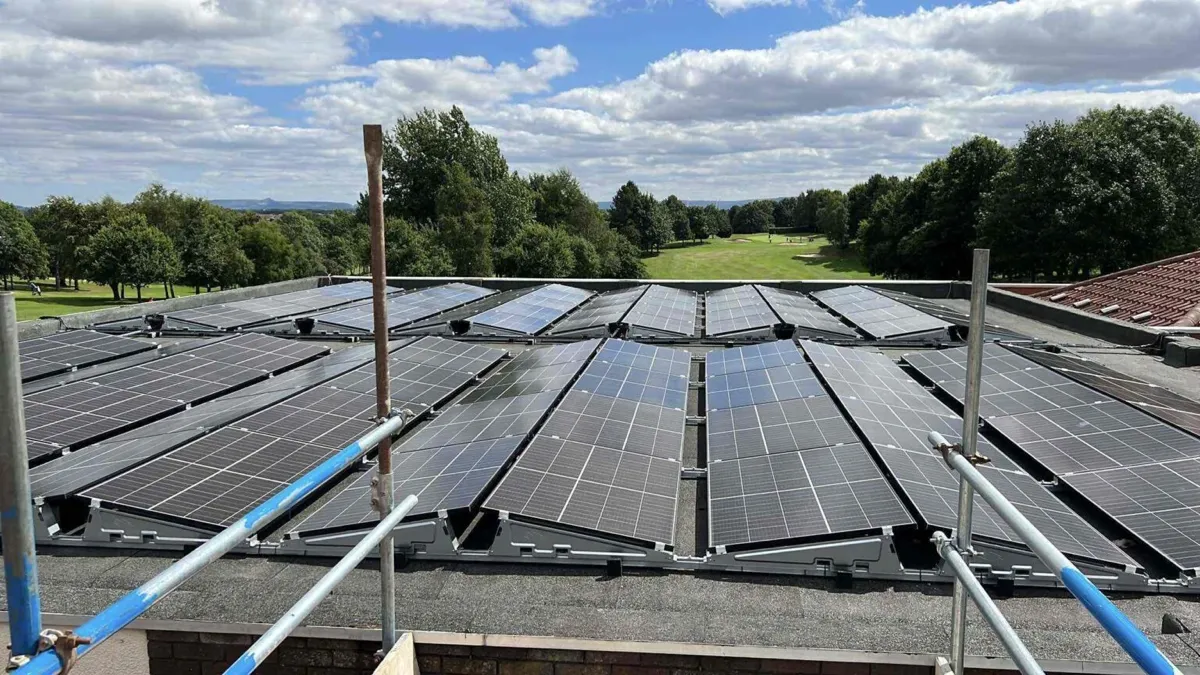
SMALL OFFICE / WORKSHOP
30–60 kWp
~£25k–£45k
Sized for typical office HQ, light-industrial workshop, GP surgery or small retail unit. ~70 to 150 panels. Saves £8k–£18k/year on grid imports.
EnquirePicking the right commercial solar system size is the single biggest determinant of project ROI. Too small and you under-serve daytime load. Too big and you over-export at cheap rates. The right size matches the array kWp output to your daytime consumption profile — typical 70-90% self-consumption, payback under 3 years. This page walks through the maths, the inputs we need, and worked examples by sector.
Bankable-grade PVsyst yield modelling · Half-hour electricity data analysis · Roof + structural load modelling · Custom-sized to your actual consumption · MCS/NAPIT accredited
Every review on this page is from a real Yorkshire customer, sourced directly from our Google Business Profile.
Read all reviews"I would definitely recommend Future Power Team, they were a really professional company, who took time to understand our green energy requirements and install a system to deliver-…"
"The team has been very helpful and professional from begin to the end. Specially Kane. Just had Solar Panels installed by future power team. Highly recommended. Thanks very much fo…"
"Faultless service and great install, aftersales were quick and efficient. Big thanks to Scarlett who helped me out post install."
"This company always has the time and knowledge customer support has been brilliant getting a professional job done these days isn’t easy they did a fantastic job and I would recomm…"
"From start to finish with dealing with the team all have taken their time with myself and my wife with all the questions toward taking the step of having Solar panels installed. Th…"
"Excellent service. Kane always helpful and knowledgeable."
"We are very happy with the pre and post sales attention we received. The installation was completed on time with a minimum of fuss, so much so we had not realised the panels had be…"
"We have nothing but praise for the guys at Future Power Team Ltd. From arriving at the time expected to the final setting up on the app after everything was installed, the guys wer…"
The size of your commercial solar system is the single biggest determinant of project ROI — bigger than panel choice, bigger than inverter brand, bigger than mounting type. A system sized to genuinely match your daytime load profile delivers 70-90% direct self-consumption (displacing 12-25p/kWh grid imports) and pays back in 2-4 years. A system sized wrongly — too small, too big, mismatched to load timing — can stretch payback to 6-8 years and feel disappointing for a decade.
Sizing isn't just "panels per square metre of roof." The right inputs are annual electricity consumption (kWh/year), load profile through the day and across the year (which is best derived from half-hourly meter data), roof area + orientation + shading, and your financing and tax position. With all four we run PVsyst-grade yield modelling against your actual load profile and predict self-consumption rate, export volume, year-1 cash impact and 25-year ROI to within ±5% accuracy.
At Future Power Team we deliver a sized system + bankable yield model + ROI projection within 7 working days of site survey. Half-hour meter data ideal; quarterly bills + sector load profiles workable. Most quotes also model two or three sizing alternatives (e.g. 100 kWp vs 150 kWp vs 200 kWp) so you can see the sensitivity of payback to size. Request a free site survey + sizing model.

Finance available: spread the cost over 3–10 years from 10.9% APR Representative with Phoenix Financial Consultants. See finance options →
Every quote is bespoke — these are reference points to anchor expectations. Actual size for your specific site comes from analysis of your half-hour consumption data, roof survey and operational pattern.
Sized for typical office HQ, light-industrial workshop, GP surgery or small retail unit. ~70 to 150 panels. Saves £8k–£18k/year on grid imports.
EnquireSized for medium warehouse, large retail, school, packhouse, dairy parlour or mid-size manufacturing site. ~240 to 600 panels. Saves £25k–£65k/year. Most common installation size.
EnquireSized for large factories, distribution centres, multi-building estates, large agricultural enterprises. 1,200 to 2,500+ panels. Saves £120k–£250k+/year. Usually with battery storage and active load management.
EnquireIndicative pricing based on clean industrial roof, standard pitch, no DNO upgrade required, no structural reinforcement. Ex-VAT. Capital allowances typically reduce net cost by ~20%. Actual project pricing depends on specific roof condition, mounting type, inverter platform and any optional battery storage.
Sizing isn't a one-number-fits-all calculation. The four inputs below get weighted against each other to produce a system size that maximises ROI for your specific site and operational reality.
The first input is your last 12 months of grid imports — total kWh/year and monthly breakdown. Most commercial sites have half-hour (HH) metering already and we can pull the data directly from your supplier. If not, your last 6 quarterly bills give enough. Rule of thumb: a system sized at 60-80% of annual kWh consumption usually delivers maximum self-consumption.
Annual total isn't enough — the timing of consumption matters more. Manufacturing running 9am-5pm has very different solar economics from 24/7 cold storage. We pull half-hour data to build a daily/seasonal load curve, then PVsyst-model the array against that curve to predict self-consumption. Target: 70-90% direct self-consumption.
Available roof area, orientation (south / east-west / north slopes), pitch, shading from chimneys / parapets / nearby buildings, and structural condition all constrain achievable kWp. A typical industrial roof carries ~140 Wp/m² of installable PV; a fragmented roof with shading drops to 100 Wp/m². Drone survey + 3D model establishes the achievable maximum.
The "right" size depends on cash + tax constraints too. A profitable ltd-co with £500k of AIA capacity can comfortably absorb a 250 kWp install at £175k via AIA + cash; a smaller ltd-co might prefer 100 kWp via lease-purchase. We model the financing route alongside the technical sizing — both go into the final quote.
Different sectors have different load profiles — and therefore different optimal sizing. Mapped here are the six sectors we install across most often, with typical size bands and the load drivers behind them.
Typical office runs heaviest 8am-6pm — lighting, HVAC, IT, kettles. Solar covers 60-80% of daytime load on a south-facing roof. Sizing 30-80 kWp depending on headcount and air-conditioning load. ~£25k-£60k typical install.
Warehouses run continuous high-bay LED lighting, HVAC, automated material handling, increasingly fleet EV charging. Solar typically covers 70-90% of daytime load on the large low-pitch roof. 100-250 kWp typical, ~£70k-£175k.
Factory load profile depends on shift pattern — single-shift sites with daytime production are textbook solar fits; 24/7 sites need solar + battery to time-shift overnight load. 250 kWp - 1 MWp typical, with substantial battery storage on 24/7 sites.
See factories detail →Agricultural load varies hugely by sector — dairy parlour ~50-80 kWp; grain dryer ~150-300 kWp (with high seasonal peak); poultry shed ~50-150 kWp continuous. We size to seasonal peaks where high-load periods drive electricity bills.
See agricultural detail →Retail sites are dominated by lighting and refrigeration during opening hours. Supermarkets and convenience stores typically need 50-100 kWp; smaller retail 30-50 kWp. Strong fit for 7-day-a-week operations — Sunday solar generation displaces grid imports just like weekdays.
Hospitality runs continuous lighting + HVAC + kitchen + laundry + housekeeping. Solar+battery often makes sense — battery shifts daytime solar into evening peak. 50-200 kWp typical depending on guest capacity.
Yorkshire's commercial estate covers the full sizing range we work with — small workshops and offices on city-centre estates that take 20-50 kWp; mid-range warehouses and packhouses across the M62 corridor that take 100-250 kWp; large factories and distribution centres around Wakefield, Bradford and Doncaster that take 500 kWp-1 MWp; and a long tail of agricultural sites from 30 kWp dairy parlours through to 300 kWp grain-handling operations.
The Yorkshire weather profile is favourable for sizing decisions — at our latitude, a south-facing low-pitch roof generates ~950 kWh per kWp per year (within 5% of the UK's best yields, and 15-25% above Scotland). East-west split roofs (common on industrial buildings) generate ~85-90% of south-facing yield. North-facing roofs we generally don't recommend covering with PV. This data feeds straight into the sizing model — we know what your specific roof orientation will generate before we leave site after survey.
Common sizing pitfalls we help avoid: (a) sizing to annual kWh without checking load timing — a 200 kWp array on a 24/7 site with overnight load is wrong without battery; (b) ignoring known future load growth (EV fleet, heat pump, expanded production); (c) under-sizing to "stay within AIA cap" when a larger project would still clear AIA + Full Expensing; (d) over-sizing to maximise SEG export — export rates rarely pay back the marginal panel cost. See our factories sizing guide for the largest scale, our farms page for the agricultural-specific sizing patterns, and our commercial hub for the broader picture.
We work across a full range of leading brand partners — picking what fits your home, your tariff and your roof. Same install standard whichever you choose.
See all 19 brand pages











Honest answers about commercial solar sizing — how to work it out, how many panels for warehouses / factories / offices, undersizing vs oversizing trade-offs, future expansion, battery storage impact, and yield prediction accuracy.
Request a sizing modelTell us about your home and we'll be in touch within 24 hours to book your free survey. Your all-inclusive, itemised quote follows within 5 working days. No pressure, no pushy sales, just honest support from a friendly local team.