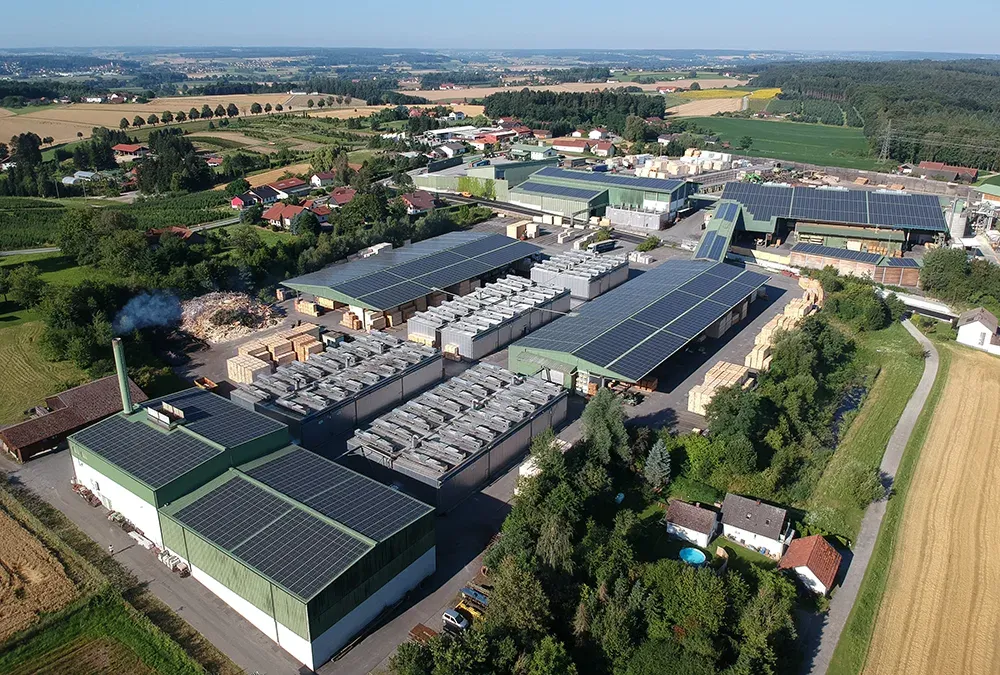
SOLAREDGE — 50 kWp
~£42k
cost incl. optimisers
SolarEdge SE82.8K-VR inverter + per-module optimisers (P650 or P850) + 120 panels. ~£200-£300/kWp premium over string-inverter equivalent but insurer-required on many commercial roofs.
EnquireSolarEdge's per-module power-optimiser architecture is the insurer-preferred platform on larger commercial installs — eliminates arc-fault risk from string-level mismatches, delivers per-module monitoring that catches degraded panels years before yield drops show up, and unlocks safer roof installations under the latest IEC 61730 fire-risk classifications. We're a SolarEdge-certified commercial EPC installer.
SolarEdge-certified commercial installer · Per-module monitoring + diagnostics · SolarEdge Designer + 3D drone modelling · Energy Hub inverter with battery-ready DC architecture · 12-year inverter warranty · 25-year optimiser warranty
Every review on this page is from a real Yorkshire customer, sourced directly from our Google Business Profile.
Read all reviews"Had panels and battery installed in March 25. Great service throughout the process from quote to install, all documentation sent through quickly following install. Would recommend…"
"Very helpful friendly team, Lee as all the other reviews state was most helpful- honest - polite and friendly. Would highly recommend this team and their business."
"I would definitely recommend Future Power Team, they were a really professional company, who took time to understand our green energy requirements and install a system to deliver-…"
"The team has been very helpful and professional from begin to the end. Specially Kane. Just had Solar Panels installed by future power team. Highly recommended. Thanks very much fo…"
"Faultless service and great install, aftersales were quick and efficient. Big thanks to Scarlett who helped me out post install."
"This company always has the time and knowledge customer support has been brilliant getting a professional job done these days isn’t easy they did a fantastic job and I would recomm…"
"From start to finish with dealing with the team all have taken their time with myself and my wife with all the questions toward taking the step of having Solar panels installed. Th…"
"Excellent service. Kane always helpful and knowledgeable."
SolarEdge's per-module power-optimiser architecture is the insurer-preferred platform for larger UK commercial solar installations. Where conventional string inverters connect 12-25 panels in series with their output limited by the weakest panel, SolarEdge places a small DC-DC optimiser on every panel — each panel runs at its own maximum power point independently of its neighbours. The practical result on commercial roofs: 3-12% higher yield over the system lifetime, full per-module monitoring and diagnostics, inherent module-level rapid shutdown (MLRSD) for fire-risk mitigation, and battery-ready DC architecture in the Energy Hub commercial inverters.
The premium over a string-inverter system runs £200-£300/kWp installed — about 25-35% higher at 50 kWp scale, falling to 10-15% at 250 kWp+. Payback on the premium comes from three sources: yield uplift on real-world roofs with any shading or mixed orientation; insurer-discount on commercial property cover (most UK commercial PV insurers offer rate reductions for MLRSD-compliant installs); and avoided cost of add-on rapid-shutdown devices that string-inverter systems need for the same insurer spec.
At Future Power Team we're a SolarEdge-certified commercial EPC installer, holding current certifications across residential, light-commercial three-phase, and commercial Energy Hub product lines. SolarEdge is one of our three core commercial platforms (alongside FoxESS and Sigenergy). For straightforward roofs without insurer mandate, FoxESS often wins on cost; for complex roofs, mission-critical sites, or insurer-mandated installs, SolarEdge is usually the right call. See our SolarEdge brand hub for the residential context and request a free commercial site survey to see which platform fits your specific roof.

Finance available: spread the cost over 3–10 years from 10.9% APR Representative with Phoenix Financial Consultants. See finance options →
SolarEdge commercial pricing scales with system size and the specific optimiser model (P650 / P850 / Energy Hub). Indicative figures below assume modern Energy Hub inverter range and current optimiser stock. Every quote is bespoke after roof survey and structural sign-off.
SolarEdge SE82.8K-VR inverter + per-module optimisers (P650 or P850) + 120 panels. ~£200-£300/kWp premium over string-inverter equivalent but insurer-required on many commercial roofs.
EnquireSolarEdge dual-inverter setup with 240 panels + per-module optimisers. Standard for warehouse / packhouse / mid-size factory roofs where insurer-mandated per-module shutdown is required.
EnquireLarge industrial array with SolarEdge Energy Hub inverters + per-module optimisers + battery-ready DC architecture + module-level rapid shutdown. Insurer-preferred on roofs above 250 kWp.
EnquireIndicative pricing assumes a clean industrial roof, standard pitch, no DNO upgrade required. Ex-VAT. SolarEdge premium over string-inverter equivalent is ~£200-£300/kWp installed, which typically pays back via yield uplift + insurer-discount + avoided RSD-device cost within 5-7 years. Energy Hub option recommended where battery storage is planned within 5 years.
At 250 kWp+ scale, the SolarEdge architectural advantages compound. The four reasons below explain why we recommend SolarEdge on most complex commercial roofs and almost all insurer-mandated installations.
Conventional string inverters connect 12-25 panels in series — a single degraded or shaded panel drags the whole string's output down. SolarEdge optimisers operate each panel independently at its own MPP (maximum power point), so a shaded or degraded panel only affects its own output, not the string. Real-world yield uplift: typically 3-12% over equivalent string-inverter systems on industrial roofs with any shading or mixed orientation.
Most UK commercial insurers now require module-level rapid shutdown (MLRSD) on commercial PV systems — a regulatory response to a small number of high-profile arc-fault fires in earlier-generation installations. SolarEdge's architecture inherently delivers MLRSD — when AC supply is interrupted, each optimiser shuts down its panel to a safe ~1V output. String inverters require add-on rapid-shutdown devices at extra cost; SolarEdge has it built-in.
Every SolarEdge install ships with per-module monitoring via SolarEdge Cloud. Each panel reports voltage, current, temperature and power output every 5-15 minutes. We see exactly which panel is underperforming, by how much, and can dispatch a technician to a specific position on the roof without diagnosis time. Typical fault-detection lead time: hours vs days/weeks for string-inverter systems.
SolarEdge Energy Hub inverters include integrated DC-coupled battery interfaces — when you add commercial battery storage 1-3 years after the initial PV install, it's a snap-in connection rather than a full inverter replacement. Particularly valuable on commercial sites planning EV-fleet expansion or 24/7 operation transitions. The DC-coupled architecture is ~3% more efficient than AC-coupled retrofit batteries.
Different commercial contexts have different needs. Mapped here are the six scenarios where SolarEdge's per-module architecture delivers measurably better outcomes than equivalent string-inverter systems.
SolarEdge optimisers shine on complex industrial roofs — north-light sawtooth roofs, mixed east-west splits, roofs with chimneys / plant rooms / parapet shading. Per-module operation extracts 5-15% more yield than equivalent string systems where shading exists.
UK commercial property insurers (Aviva, Zurich, AXA, RSA) increasingly require module-level rapid shutdown for fire-risk mitigation. SolarEdge delivers MLRSD inherently — no add-on devices, no extra string-inverter costs. Often the deciding factor for insurer-approval on warehouse and industrial installs.
Per-module architecture means adding panels later is straightforward — each new panel gets its own optimiser, plugs into the existing system, no need to rebalance strings. Useful for businesses planning to expand solar in 2-3 phases as cashflow permits.
SolarEdge Energy Hub inverters include DC battery interfaces — when commercial battery storage is added later, the wiring is simpler and ~3% more efficient than AC-coupled retrofit. Particularly valuable for sites planning EV-fleet expansion or 24/7 transition.
Mission-critical commercial sites (hospitals, pharma production, data centres, food cold-chain) benefit from per-module monitoring + diagnostics that catch issues before they propagate. Combined with battery storage for backup, SolarEdge is often the only commercial-grade platform considered acceptable by site-risk teams.
Above 250 kWp the per-kWp optimiser premium becomes very small in % terms while the benefits (yield uplift, fault visibility, insurer compliance) scale linearly. SolarEdge is the most-installed platform on >500 kWp UK commercial systems we deliver.
See factories detail →Three SolarEdge commercial installations from across Yorkshire. Each system uses per-module optimisers + a SolarEdge commercial inverter, delivering insurer-mandated MLRSD rapid shutdown and per-module monitoring as standard.
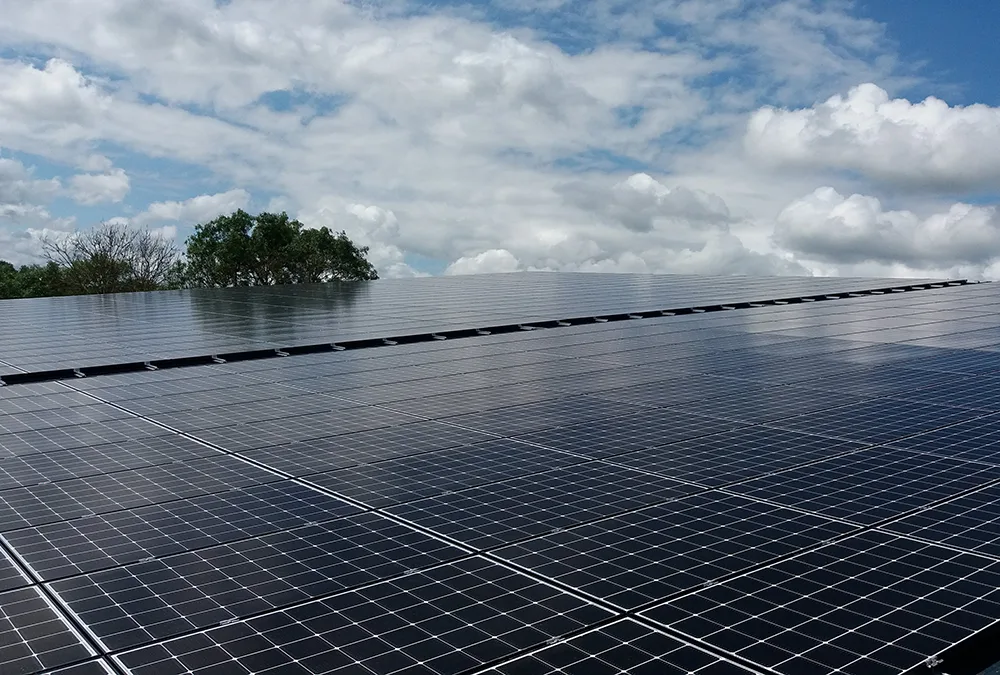
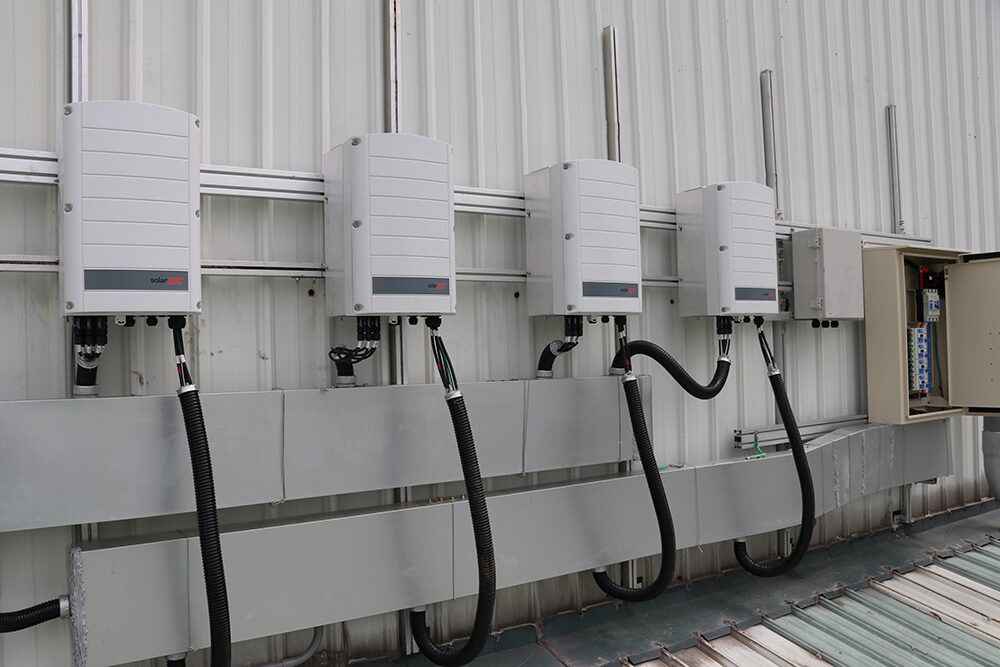
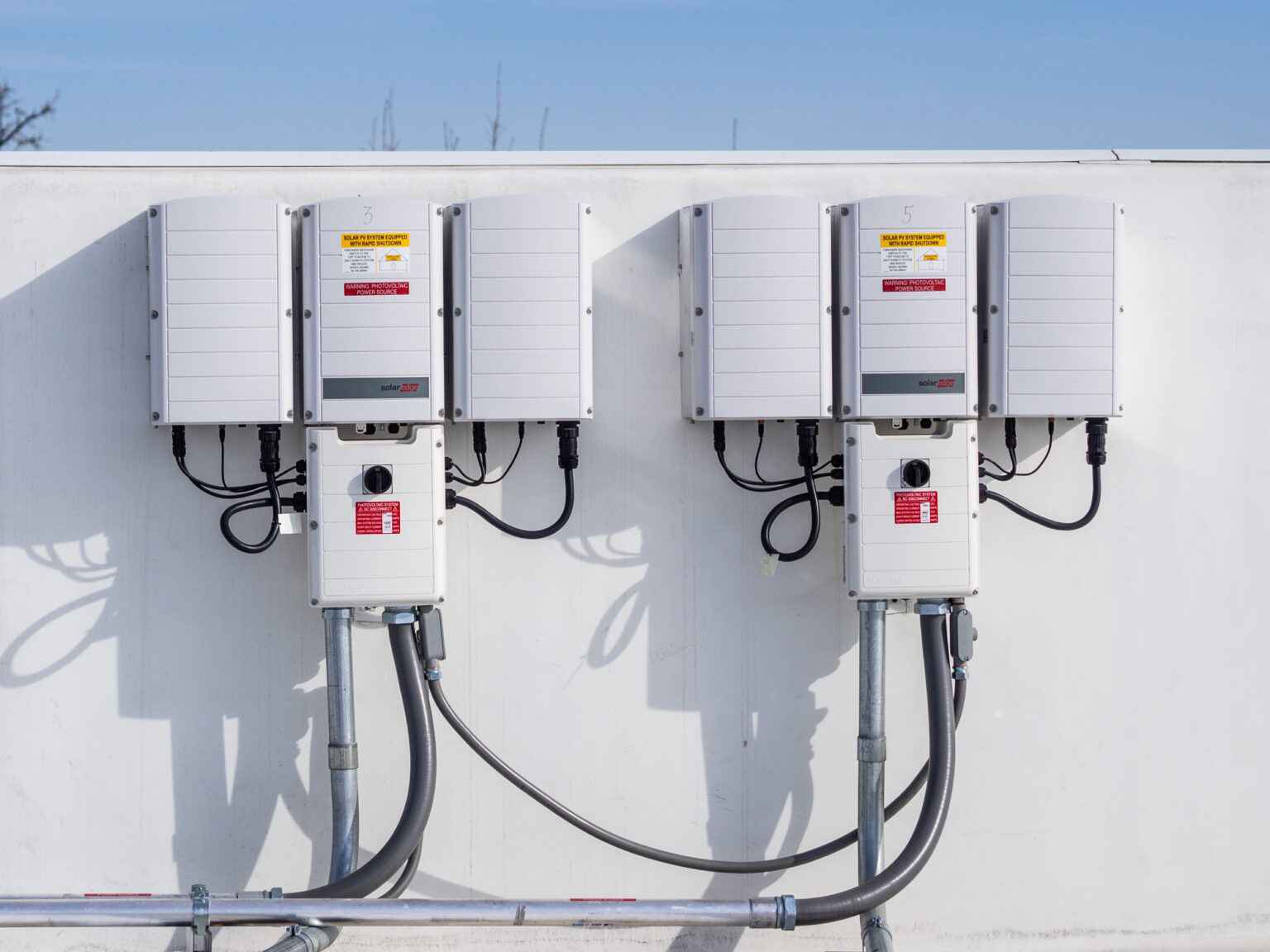
SolarEdge is our most-installed platform on Yorkshire commercial installs above 250 kWp, primarily because of two factors that compound at scale: insurer requirements (most UK commercial property insurers prefer or mandate MLRSD on installs above this scale) and per-module diagnostic visibility (which becomes invaluable when you're maintaining 600+ panels across a single industrial roof).
Common Yorkshire commercial use cases where SolarEdge dominates: complex industrial roofs in city-centre estates (Leeds Aire Valley, Sheffield steel-engineering belt) with chimneys, plant rooms and adjacent buildings creating shade; multi-tenancy industrial estates where insurer requirements vary by tenant and SolarEdge's MLRSD covers all eventualities; healthcare and pharma sites across the region with strict site-risk standards; large agricultural enterprises (poultry production, dairy operations) where per-module monitoring catches issues without dispatching engineers across rural sites. We've delivered SolarEdge installs from 30 kWp light-commercial up to over 500 kWp full industrial.
For commercial sites planning battery storage in a phased approach — install solar now, add battery in year 2-3 when cashflow permits — the SolarEdge Energy Hub inverter is uniquely well-suited because of its built-in DC battery interface. See our SolarEdge residential page for the broader brand context, our factories page for the industrial economics, and our O&M page — SolarEdge installs are particularly straightforward to maintain because of the per-module monitoring granularity.
We work across a full range of leading brand partners — picking what fits your home, your tariff and your roof. Same install standard whichever you choose.
See all 19 brand pages




Honest answers about SolarEdge for commercial — the per-module architecture, cost premium vs string inverters, insurer-preferred MLRSD, optimiser reliability, monitoring, battery-ready Energy Hub, large-system scaling, and comparison with FoxESS / Sigenergy.
Request a SolarEdge quoteTell us about your home and we'll be in touch within 24 hours to book your free survey. Your all-inclusive, itemised quote follows within 5 working days. No pressure, no pushy sales, just honest support from a friendly local team.