Can I retrofit a battery to my existing solar system? +
Yes — retrofit battery (adding storage to an existing solar array) is one of our most-quoted services. We AC-couple the battery to your existing inverter so your existing solar setup is unchanged — your Feed-in-Tariff (if you have one) is preserved, your generation continues exactly as before, and the battery adds tariff-controlled charging via Octopus Intelligent Flux. Typical retrofit installs cost from £2,995 for a 5 kWh battery and complete in a single day on site. We handle the DNO G98 / G99 notification for the export-control change.
What size battery do I need? +
Three factors decide it: (1) your daily electricity consumption — most UK households use 8-12 kWh/day, larger homes 15-25 kWh; (2) your solar generation — a 4 kWp array generates ~3,400 kWh/year, mostly between April-September; (3) your tariff strategy — Octopus Flux benefits from larger batteries (10-15 kWh) because they can store more daytime solar to export at the 4-7pm peak. Rule of thumb: 5-6 kWh for terraces/small semis, 10 kWh for typical 3-4 bed semis, 15-20 kWh for larger detached + EV + heat pump homes.
How does Octopus Intelligent Flux work with battery storage? +
Octopus Intelligent Flux is a smart tariff where your battery stores your daytime solar and exports it back to the grid during the 4-7pm peak, when export rates are at their highest (import and export are matched). The Octopus API decides charge / hold / export every 30 minutes based on wholesale electricity prices. Your battery's manufacturer app (FoxESS, Tesla, Sigenergy, SolarEdge) talks to the Octopus API automatically — no manual schedule needed. The best smart tariff and the rate vary by region, so we'll help you find the best available in your area — it adds to your savings on top of standard solar generation.
What's the difference between AC-coupled and DC-coupled battery storage? +
DC-coupled batteries connect directly to the solar inverter's DC side — sharing a single hybrid inverter for solar + battery + grid + EV charger. Higher round-trip efficiency (~95%) and simpler system. Used on new installs where solar + battery are designed together. AC-coupled batteries connect to your existing AC supply via a separate inverter — used for retrofitting onto an existing solar system without replacing the original inverter. Slightly lower efficiency (~90%) but allows you to add storage without disturbing the original solar setup. For new installs, choose DC-coupled. For retrofits, AC-coupled is the standard.
Which battery brands does FPT install? +
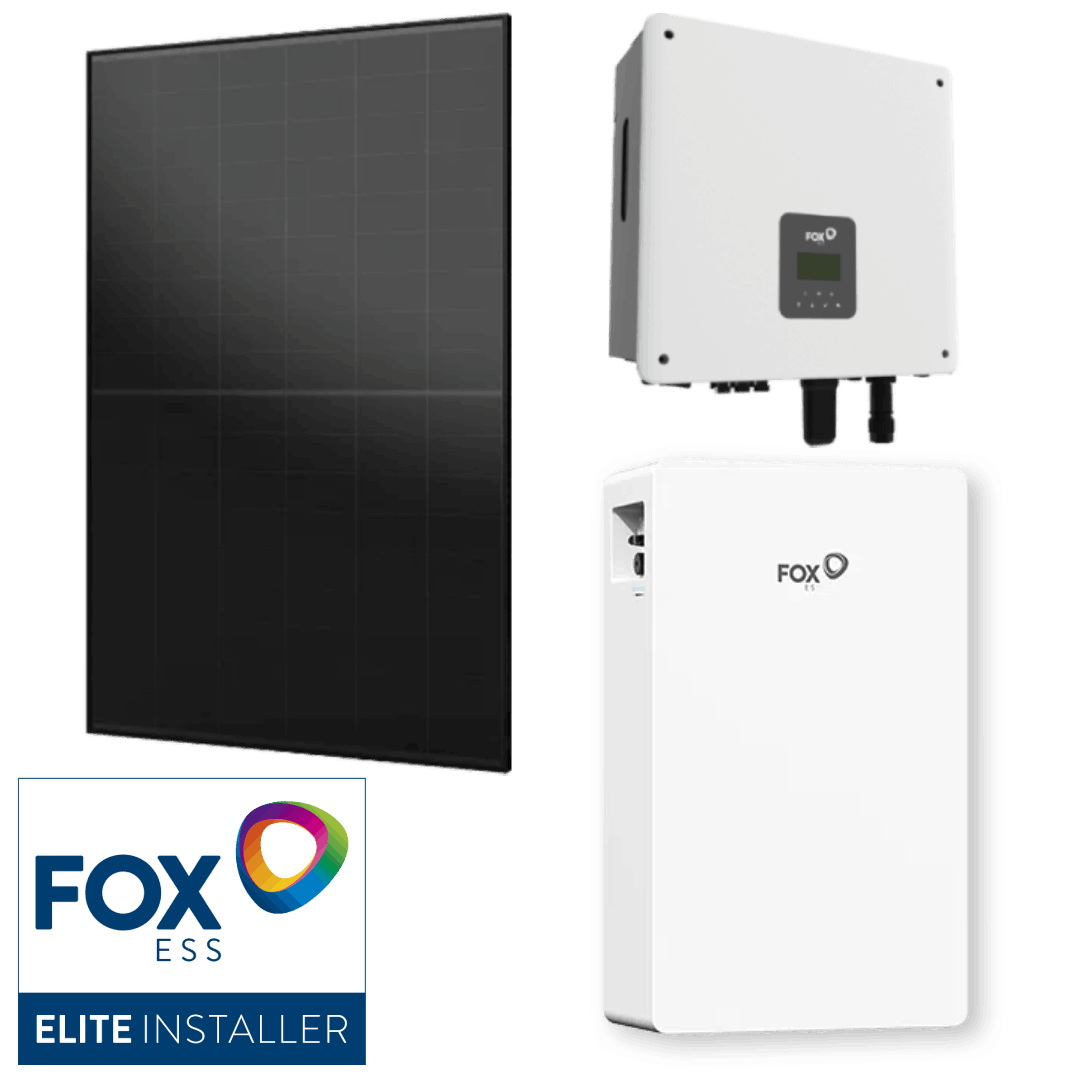
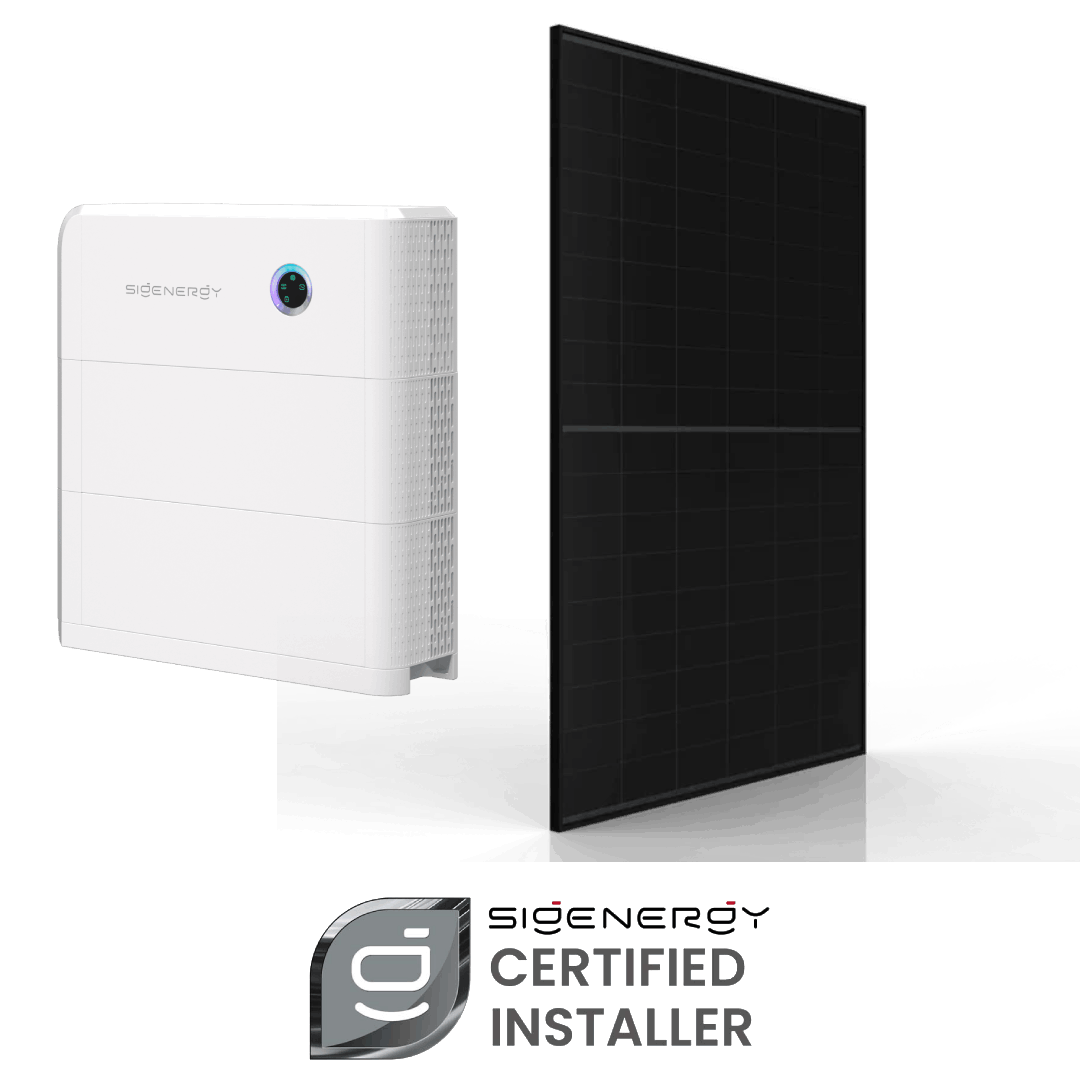
We're certified across 19 brand partners: FoxESS (EP6 modular, EP12 high-capacity), Tesla (Powerwall 3 + Gateway), Sigenergy SigenStor (bi-directional EV charging), SolarEdge Energy Bank, Duracell Energy (Dura5/Dura10/Dura16), Pylontech (US3000/UP5000), SolaX Triple Power, Enphase IQ Battery 5P, Fogstar Energy, AlphaESS, Growatt, EcoFlow PowerOcean and others. Our technical advisors recommend per-tariff and per-use-case — we don't lock customers into a brand for our margin reasons.
How much does a residential battery storage system cost? +
Indicative pricing: retrofit 5 kWh battery onto existing solar £2,995 fully installed. New solar + 6 kWh battery £5,995. New solar + 10 kWh battery £6,795. New solar + Tesla Powerwall 3 (13.5 kWh) £12,195. Per-kWh installed cost runs ~£600/kWh on standard hardware, ~£900/kWh on Tesla Powerwall or Sigenergy premium platforms. All prices fully inclusive: scaffolding (where solar is included), MCS certification, DNO paperwork, commissioning, 5-year FPT workmanship warranty.
How long do residential batteries last? +
Standard warranty is 10 years on FoxESS, SolarEdge, Pylontech, Duracell, AlphaESS and most domestic platforms. Tesla Powerwall 3 + Sigenergy SigenStor carry 10-15 year warranties depending on configuration. Actual useful life typically extends 12-18 years on modern LiFePO4 chemistry (the standard for residential batteries today) — most batteries reach 80% of original capacity at year 12-15. Manufacturer warranties guarantee 70-80% capacity at end-of-warranty. The battery doesn't 'die' at warranty end — it just degrades slowly past that point.
Can I charge my battery from grid during cheap-rate periods? +
Yes — every modern battery we install supports time-of-use tariff charging. Octopus Intelligent Flux is the most-used UK tariff for this pattern (your battery stores daytime solar and exports it back during the 4-7pm peak, when export rates are at their highest, with import and export matched), but the same battery setup works with Intelligent Octopus Go (EV-focused tariff), Cosy Octopus, Eon Next Drive and similar smart tariffs from other suppliers. We set up the time-of-use schedule at commissioning — you can adjust it via your battery app afterwards.
Where should the battery be mounted — indoor or outdoor? +
Most domestic batteries we install in Yorkshire are indoor-mounted in attached garages or utility rooms (FoxESS EP6, Pylontech, SolarEdge Energy Bank). Tesla Powerwall 3 is IP67-rated and outdoor-capable — often the choice on properties without garage space. Sigenergy SigenStor can be configured for either. Indoor mounting protects the battery from temperature extremes (lithium chemistry prefers 10-30°C ambient) and extends warranty life. Outdoor mounting is fine in UK climate with the rated units but the battery management system works harder in winter.
What about whole-home blackout backup — can my battery keep my house running if the grid fails? +
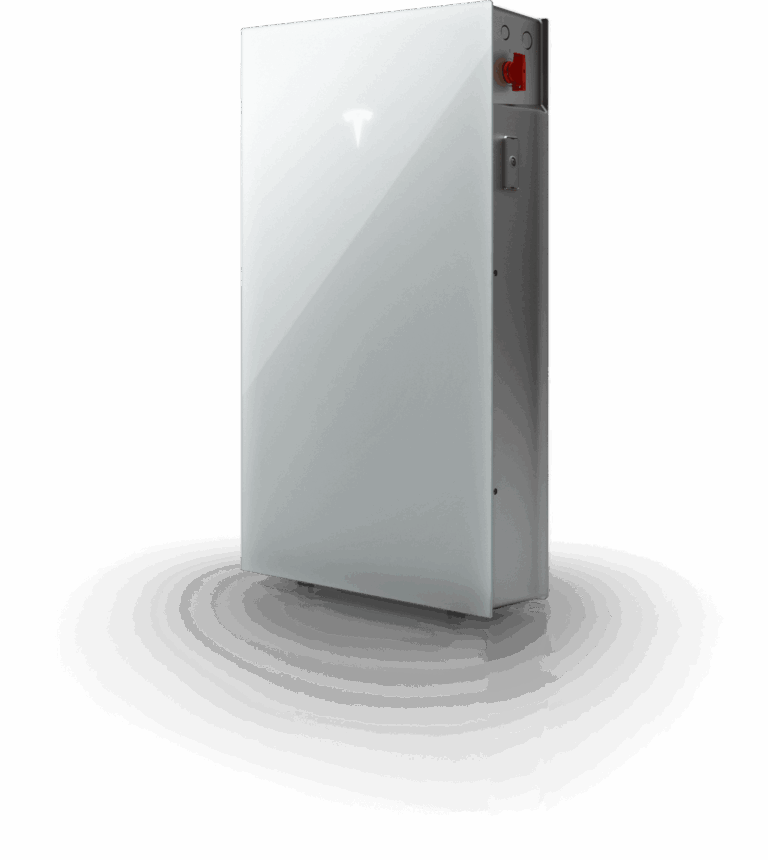
Yes — with the right hardware. Tesla Powerwall 3 + Tesla Gateway delivers seamless whole-home backup when grid fails; the system islands automatically within 100ms and your house stays powered for as long as the battery has charge. Sigenergy SigenStor also offers backup with the Sigenergy Gateway. FoxESS, SolarEdge Energy Bank, Pylontech and similar mainstream batteries DO NOT typically offer whole-home backup — they provide grid-tied tariff-controlled storage but shut down on grid failure for safety (G98/G99 anti-islanding). If blackout backup is a priority for your home, Tesla Powerwall 3 is the most-installed option in our footprint.
How long does a battery installation take? +
Retrofit battery onto existing solar: 1 day on site (no scaffolding needed; we mount the battery, install the AC connection, configure the management system, register the DNO export-control change). New solar + battery package: 2-3 days on site (1 day scaffolding + roof panel install, 1 day inverter + battery + commissioning, optional half day customer training on the app + tariff). From enquiry to working system: typically 2-4 weeks across Yorkshire.
Does a battery work with my EV charger? +
Yes — most modern batteries we install integrate cleanly with smart EV chargers. Sigenergy SigenStor + Sigenergy EV charger pairs natively for bi-directional EV charging (charge the car from solar/battery, discharge from car when needed). MyEnergi Zappi pairs with FoxESS, SolarEdge and most platforms. Tesla Wall Connector pairs with Powerwall 3 + Gateway for seamless solar+battery+EV coordination. We can specify the battery + EV charger together at quote so the integration is verified at survey, not at commissioning.